



If you’re considering rattan furniture for your café or restaurant, it pays to understand exactly what you’re buying before you commit. Rattan is a natural material that has furnished everything from breezy coastal beach clubs to busy inner-city dining rooms—and for good reason. But not all rattan furniture is created equal, and the wrong choice can leave you replacing chairs within a season rather than getting years of reliable use.
This guide answers the most common questions in plain, practical terms. We cover how rattan is structured, what makes it comfortable for extended dining, how durable it really is in commercial settings, whether it suits outdoor use, and what separates a quality commercial piece from something that looks great in a showroom but falls apart under daily café conditions. By the end, you’ll have everything you need to make a confident purchasing decision.
Key Takeaways
- Rattan is a natural material harvested from climbing palms in Southeast Asia
- Wicker describes the weaving technique, not the material itself
- Natural rattan suits indoor dining rooms and sheltered alfresco areas
- Synthetic PE rattan handles full outdoor and coastal exposure
- Frame quality is the primary factor in commercial durability
- Rattan chair designs range from classic boho to Hamptons and mid-century styles
What is a Rattan Chair?
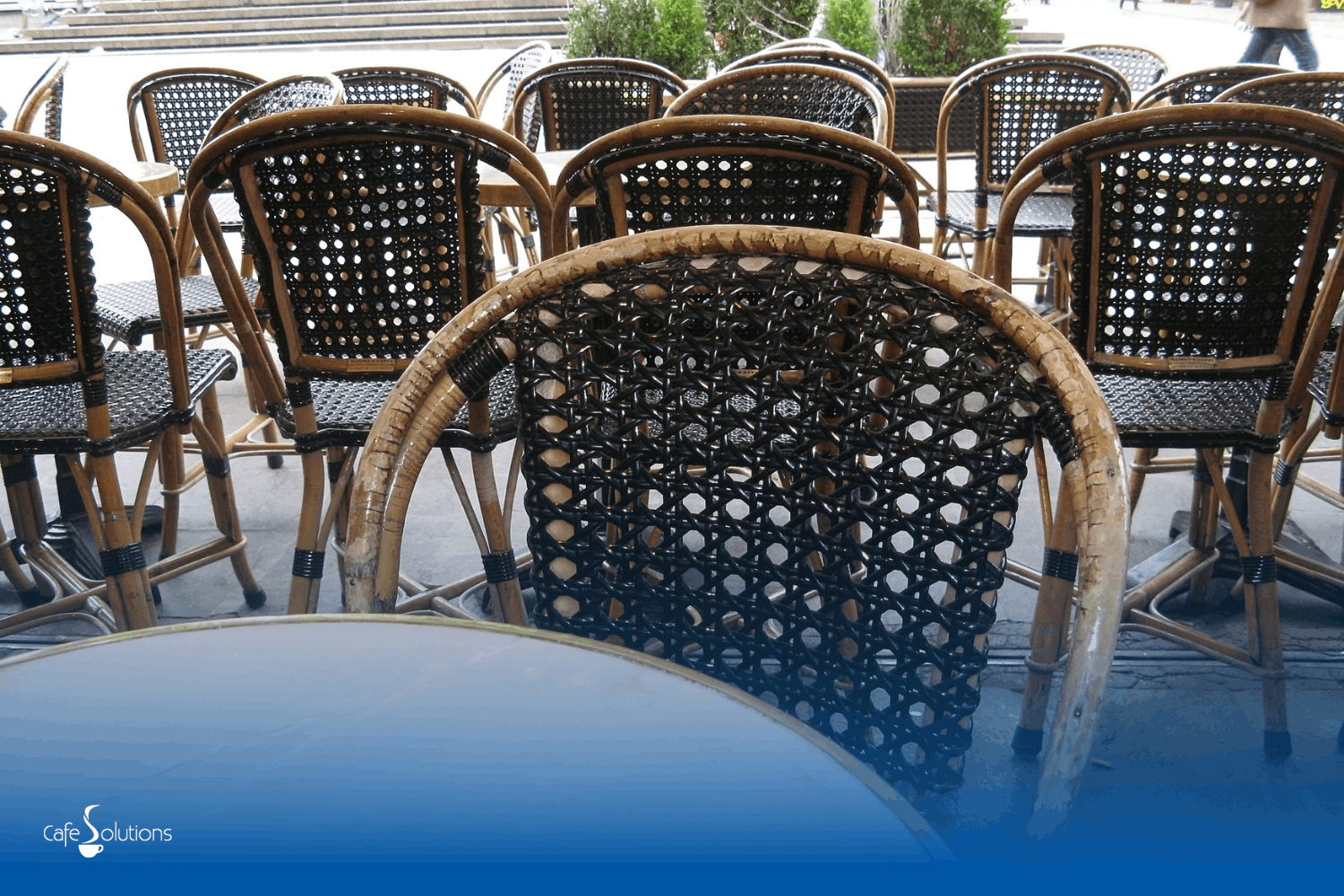
A rattan chair is a piece of seating built from rattan cane, a material sourced from the rattan palm genus Calamus. These climbing palms grow through tropical rainforests across Southeast Asia, producing long, solid cane stems that are flexible enough to bend and strong enough to bear weight.
How the Cane is Shaped
Unlike bamboo, which is hollow, rattan stems are dense throughout. This makes them well suited to steam bending, a process that shapes cane into the curved arms and backs typical of a rattan armchair without cracking the material. Once shaped, the cane is woven or lashed over a structural frame to form the seat and backrest.
How Rattan is Harvested
The harvesting of rattan is relatively low-impact. Workers cut mature stems from the vine without clearing the forest canopy, which allows the plant to regenerate. Bodies such as the Forest Stewardship Council set standards that support responsible harvest practices. This is one reason the use of rattan continues to attract interest from furniture makers and designers who value sustainable sourcing.
Rattan, Cane and Wicker: What is the Difference?
These three words are often used interchangeably in furniture retail, but they describe different things.
- Rattan is the raw material, a vine harvested from tropical forests
- Cane refers to the outer skin of the rattan stem, peeled off and used for fine weaving
- Wicker refers to the weaving method itself, not any specific material
A wicker armchair might be woven from rattan, cane, sea grass or synthetic fibre. When wicker refers to a weave technique, it simply means that strands have been worked over and under each other to create a flexible surface. For commercial buyers, this distinction matters. Always confirm whether you are purchasing natural woven rattan, pure cane or a synthetic alternative before committing to a bulk order.
Natural Rattan vs Synthetic Rattan: Which Should You Choose?
Synthetic rattan is a polyethylene strand engineered to replicate the look of natural cane. It is UV stabilised and moisture resistant, which makes it a popular choice for outdoor furniture in exposed dining areas. When combined with a powder-coated aluminium frame, synthetic rattan can handle full sun and rain without degrading.
Natural rattan delivers warmth and elegance that synthetic materials struggle to match. It suits interior dining rooms, sunrooms and covered alfresco areas where it will not face direct weather exposure.
| Feature | Natural Rattan | Synthetic PE Rattan |
|---|---|---|
| Material source | Harvested cane from Calamus palm | Extruded polyethylene strands |
| Best for | Indoor and sheltered alfresco | Full outdoor and coastal exposure |
| UV resistance | Low without treatment | High, UV stabilised |
| Moisture resistance | Low, absorbs water over time | High, does not absorb moisture |
| Frame type | Timber or steel | Powder-coated aluminium |
| Aesthetic | Warm, natural, handwoven look | Consistent, clean, modern look |
| Maintenance | Periodic oiling or lacquering | Wipe clean with damp cloth |
| Lifespan (outdoor) | Limited without shelter | Long with proper drainage |
Are Rattan Chairs Comfortable?
Are rattan chairs comfortable for long dining sessions? Yes, when the chair is well designed. The weave distributes weight across the seat base rather than concentrating it on hard points, which reduces pressure during extended sittings. A curved backrest shaped to follow the spine adds further support.
Heat and Breathability
The breathable structure of woven rattan reduces heat build-up during summer service, which makes it a practical choice in warm Australian climates.
Adding a Cushion
Many venues add a removable cushion to increase comfort and introduce upholstery colour without committing to a fixed fabric. This also allows cushions to be swapped out or laundered easily during a busy service week.
Are Rattan Chairs Durable Enough for Commercial Use?
Are rattan chairs durable in a commercial setting? Yes, but only when you select pieces built to commercial grade. The weave itself has strong tensile properties because the solid cane distributes load through the full surface. However, the internal frame carries the main structural weight, and this is where quality makes the biggest difference.
What to Look for in the Frame
- Aluminium and powder-coated steel frames extend the working life of rattan furniture significantly
- Lightweight residential imports are built to different standards and will fail faster under daily café traffic
- Always check weld quality, internal reinforcement and published load ratings before purchasing
Can Rattan Chairs Be Left Outside?
Can rattan chairs be left outside? It depends entirely on the material.
Natural Rattan Outdoors
Natural rattan should not face full outdoor exposure. It absorbs moisture, which causes swelling, mould and weave failure over time. Australian UV conditions accelerate this deterioration. The Australian Radiation Protection and Nuclear Safety Agency notes that UV levels across Australia are among the highest in the world.
Synthetic Rattan Outdoors
Synthetic rattan is built specifically for outdoor use. The PE strands do not absorb water, and the UV stabilisation prevents colour fading and brittleness. For coastal venues where salt air and moisture are constant factors, synthetic rattan over an aluminium frame is the recommended choice. Natural rattan remains ideal for indoor dining rooms, sunrooms and covered alfresco areas where exposure is minimal.
Do Rattan Chairs Last in a Busy Café?
Do rattan chairs last long enough to justify the investment? In the right environment, yes.
- Indoor natural rattan maintains its structure and appearance for many years when cleaned regularly and inspected for weave tension and frame joint integrity
- Synthetic rattan in outdoor settings performs well when drainage is considered in the furniture layout
- A decorative piece designed for home décor or a home office will not meet the demands of a high-traffic dining room
Longevity depends on correct specification for the environment, consistent maintenance, and sourcing from a supplier who understands commercial requirements. Commercial grade construction is the baseline for any venue buying rattan for daily service.
How is Rattan Furniture Made?
The furniture-making process begins with the harvest. Workers in Southeast Asia cut mature rattan stems from the vine, then clean and sort canes by diameter. Smaller diameter canes are used for fine weaving and basket work. Larger diameter stems form the structural frame components of chairs and tables.
Shaping and Weaving
Steam bending allows makers to shape rattan into the curves of an armchair without cracking the cane. Handwoven panels are then worked onto the frame by skilled craftspeople. This handcraft tradition has been passed down through generations in rattan-producing regions. Modern rattan production maintains these techniques while adding quality control checks for weld strength, surface finish and seat alignment.
Synthetic Production
Polyethylene pellets are extruded into strands, which are then woven over aluminium frames. The result is a versatile furniture option that replicates the look of natural cane while offering greater resistance to weather and cleaning chemicals.
Where Does Rattan Fit in Café Interior Design?
Rattan supports a wide range of interior styles. It suits coastal dining rooms, Hamptons-inspired venues, rustic farm-to-table settings and modern design-led cafés with clean lines. Versatile rattan also works in boho spaces and mid-century influenced fit-outs where natural textures are central to the brief.
Mixing Materials
Rattan dining chairs mix and match well with timber, metal and stone table surfaces. This gives designers the flexibility to layer different materials without creating visual clutter. The timeless quality of rattan means it does not date as quickly as trend-driven furniture choices, which helps protect the capital investment in a fit-out.
Practical Handling
Rattan is also lightweight and easy to move, which makes it a practical choice for venues that reconfigure layouts for events or changing covers. It serves well as a decorative accent in reception areas, lounge zones and outdoor dining spaces.
What to Check Before You Buy Rattan for a Café
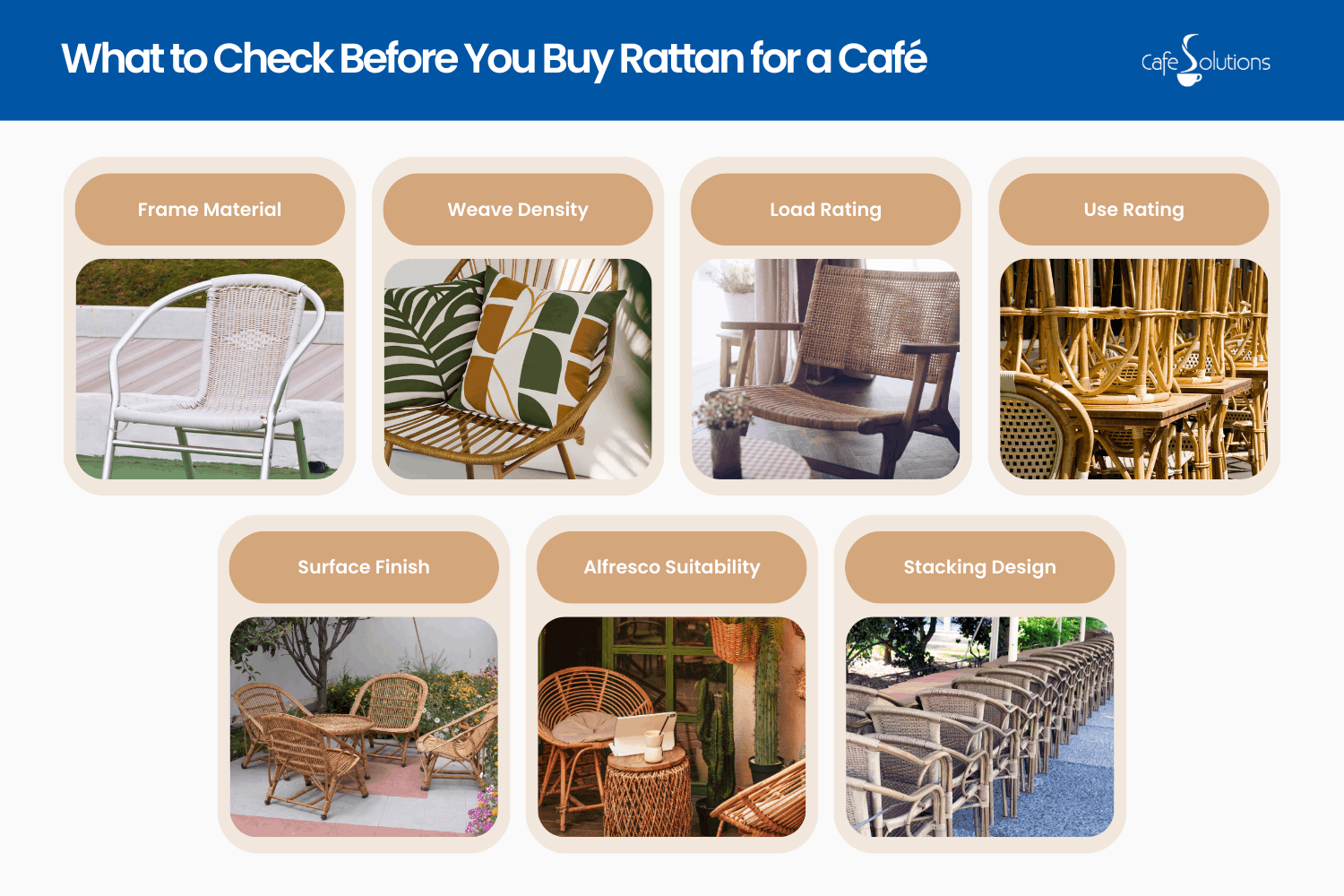
Before you buy rattan furniture for commercial use, work through these checkpoints:
- Frame material: Aluminium is preferred for outdoor settings. Powder-coated steel works well indoors.
- Weave density: A tighter weave distributes weight more evenly and resists sagging over time.
- Load rating: Verify the published rating suits the likely weight range in your venue.
- Use rating: Ask whether the piece is rated for outdoor furniture or indoor use only.
- Surface finish: Confirm it protects against moisture and the cleaning chemicals your team uses.
- Alfresco suitability: For exposed areas, choose synthetic rattan that is UV stabilised and paired with a corrosion-resistant frame.
- Stacking design: If you plan to stack chairs, confirm the design does not stress the weave joints or scratch the frame finish.
Ready to Choose the Right Rattan Chair for Your Venue?
Café Solutions supplies commercial rattan furniture designed for the demands of Australian hospitality. Through RNI Imports, we control sourcing and quality from the factory through to delivery, which means you receive consistent product across single venues and multi-site operations. We assess the material used, frame composition and finish method before listing any chair design in our range.
Whether you need a stylish woven rattan armchair for an interior dining room or a durable synthetic option for a coastal alfresco area, our team can guide you based on your environment, traffic level and layout. Explore our commercial range today and speak with us to find the right rattan seating for your next fit-out.
FAQs on Rattan Chair
Can rattan be used for weaving other furniture pieces?
Yes. Rattan is used for weaving baskets, tables, storage units and a wide range of other furniture pieces. Its flexibility allows it to be shaped into curves and detailed handwoven patterns. Many decorative and structural applications rely on the strength and workability of rattan cane.
Is rattan a popular material in Australian cafés?
Yes. Rattan is a natural material that balances comfort and style with practical handling. It suits coastal and alfresco venues across Australia and works equally well in urban dining rooms. Designers value its timeless appeal and its ability to complement many interior styles without dominating a space.
What makes rattan a versatile furnishing choice?
Rattan works across interior styles from modern design to rustic and Hamptons settings. It blends with timber, metal and stone finishes without visual conflict. That flexibility makes it a versatile furniture solution for commercial spaces where the brief changes between fit-out cycles.
Back to Top: What is a Rattan Chair? Everything Australian Café Owners Need to Know